

You make the material. Right now, somebody else decides how it looks.
Your buyer's first real look at your fabric happens when you are not in the room. No agent, no booth, no salesperson. It happens on a screen nobody calibrated, from a photo somebody else took, described in words that carry no number. Digitising, presenting, sharing, simulating and generating with AI all start from one scan that takes just over a minute.
Three things fabric and knitwear teams lose without noticing.
Your collection moves at courier speed.
Every conversation with a new customer starts with a package and a wait. The season does not wait with you.
Your material gets retold by other people.
A phone photo, an uncalibrated monitor, a light booth in a different timezone. By the time it reaches the designer, it is a description of your fabric, not your fabric.
Digital collections get built without you.
Brands are building lines in 3D. A material with no reliable digital form does not get dropped into a garment, and what does not get dropped in does not get chosen.
What's specific about this industry.
Quality holds. Deliveries land. Every customer gets the samples they ask for, in the format they ask for. And still, the moment your fabric leaves the building, its reality starts to decay. Not because anyone made a mistake, but because the way material travels through a supply chain was never built to carry it accurately.
Nobody ever needed a fabric or knitwear company to prove itself on a screen, so the habit of showing was never built. The skill went into the product. It is still there, on the factory floor, while the decision now happens somewhere you do not control. A photograph can be made beautiful, but it cannot be dropped into a 3D tool, it cannot be color managed across two continents, and it cannot serve as the reference an approval is measured against later.

Your material. One click, images rendered automatically, available everywhere.
Your materials are scanned, rendered automatically and land in your 3D Library together with the tech data from ERP or PLM. From there they reach your clients as a download, through Dedicated Share, or through your e-com solution.
Scan the sample once. Everything after that is distribution.
The order matters. Each step is only as good as the capture underneath it, which is why the sequence starts at the sample and not at the software. Each step also has a limit, and you should know them now rather than discover them in a pilot.
The sample becomes a verified twin, in just over a minute
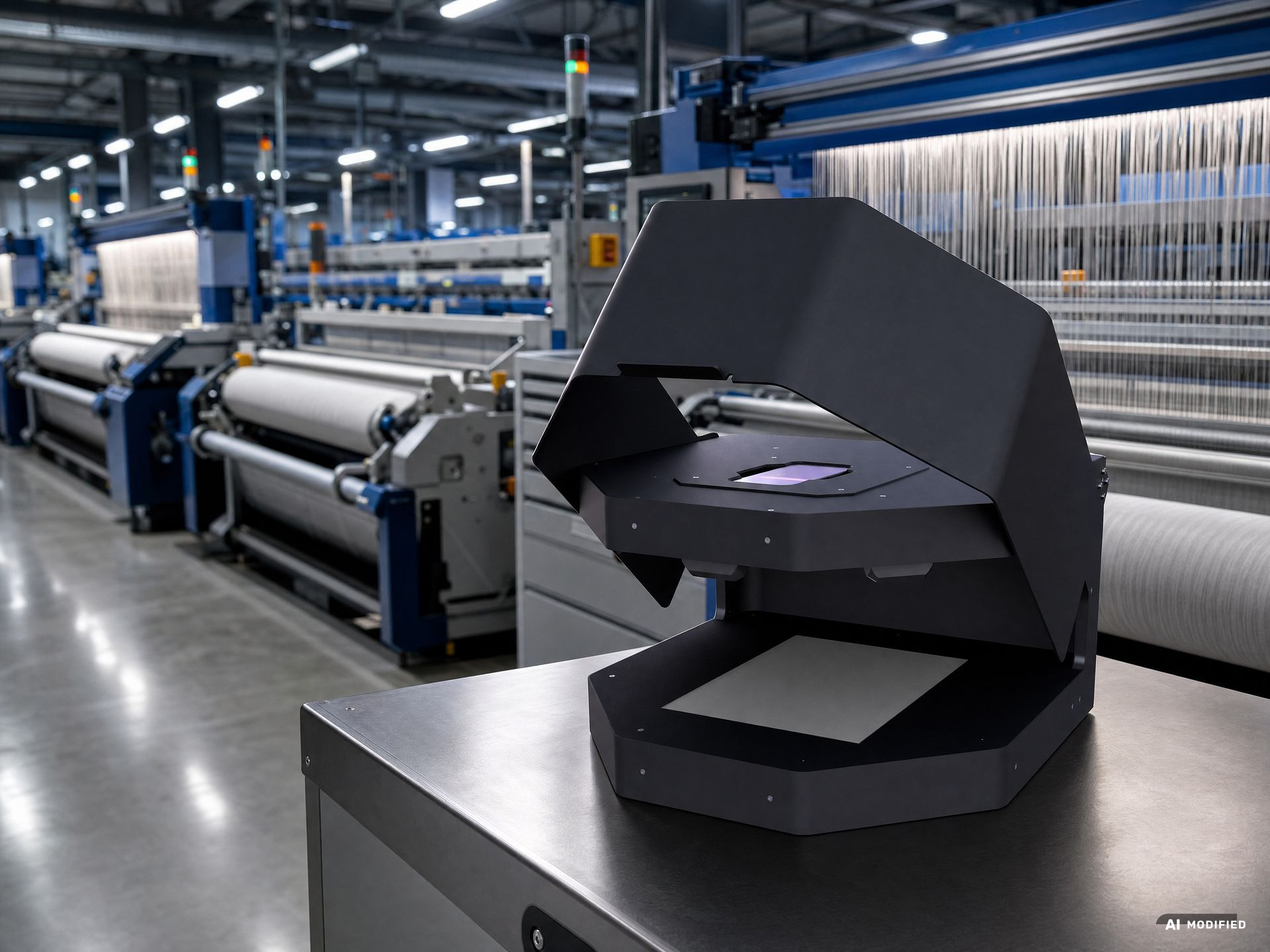
One button on the SamplR device. Photo, Measure and Scan modes capture the material under four lighting geometries, with automatic background removal and a 4K behavior video at 60 fps, so a buyer sees how the fabric moves and not only how it sits. Out comes a set of color-managed PBR maps: diffuse albedo, alpha, normal, glossiness, specular albedo and displacement.
SamplR captures appearance, which means color, gloss, structure and surface. It does not produce spectral data. Spectral color approval runs in MatchBox, and the two are deliberately separate.
The full device specification →Your range, browsable, the same on every screen it opens on
Each digitised material carries its article number, composition, your company as its source, price and availability. A designer browses, filters and compares at the moment they are actually choosing, and the reference is your capture rather than their monitor.
A catalogue is not an approval. It gets you into the conversation earlier and with better material. The commercial decision still belongs to the customer.
How the digital catalogue works →One system, many brand connections, no new portal each time
Company Connect and the Digital Handshake let you open a secure connection to each customer from the same account. You decide which brand sees which collection, and you keep working the way your own house works instead of learning a different portal for every logo. The entry does not have to be brand driven: you can digitise first and invite customers into a connection afterwards.
Your data stays yours, and sharing is per connection. That also means visibility is something you grant deliberately. Nothing broadcasts itself.
Company Connect →Your fabric, dropped into the garment before it exists
The same asset goes into CLO3D, Browzwear, Style3D and comparable tools. The glTF export carries both halves: the appearance maps and the physical properties that land in the physical property tab and drive how the garment falls. Drag and drop into a 3D window moves the appearance maps only, so the simulation looks close and behaves wrong.
Displacement values still have to be set by hand in CLO, and no PBR format in this industry carries a color standard inside it. That is a property of the formats, not of one vendor.
Which tools we connect to →AI that starts from your material instead of guessing at it
A generative model has no idea what your fabric is. It invents something plausible. Anchored to a verified capture, generated imagery starts from the real structure, the real gloss and the real color, which turns AI from a mood tool into a way of showing a customer their product in your material. AI running on unreliable material data scales the error rather than the output.
A generated image is a sales and communication asset. It is never an approval, and it does not replace a measurement. Keep the two roles apart and both stay credible.
Product images that match reality →One scan. Three finished images, rendered to your specification.
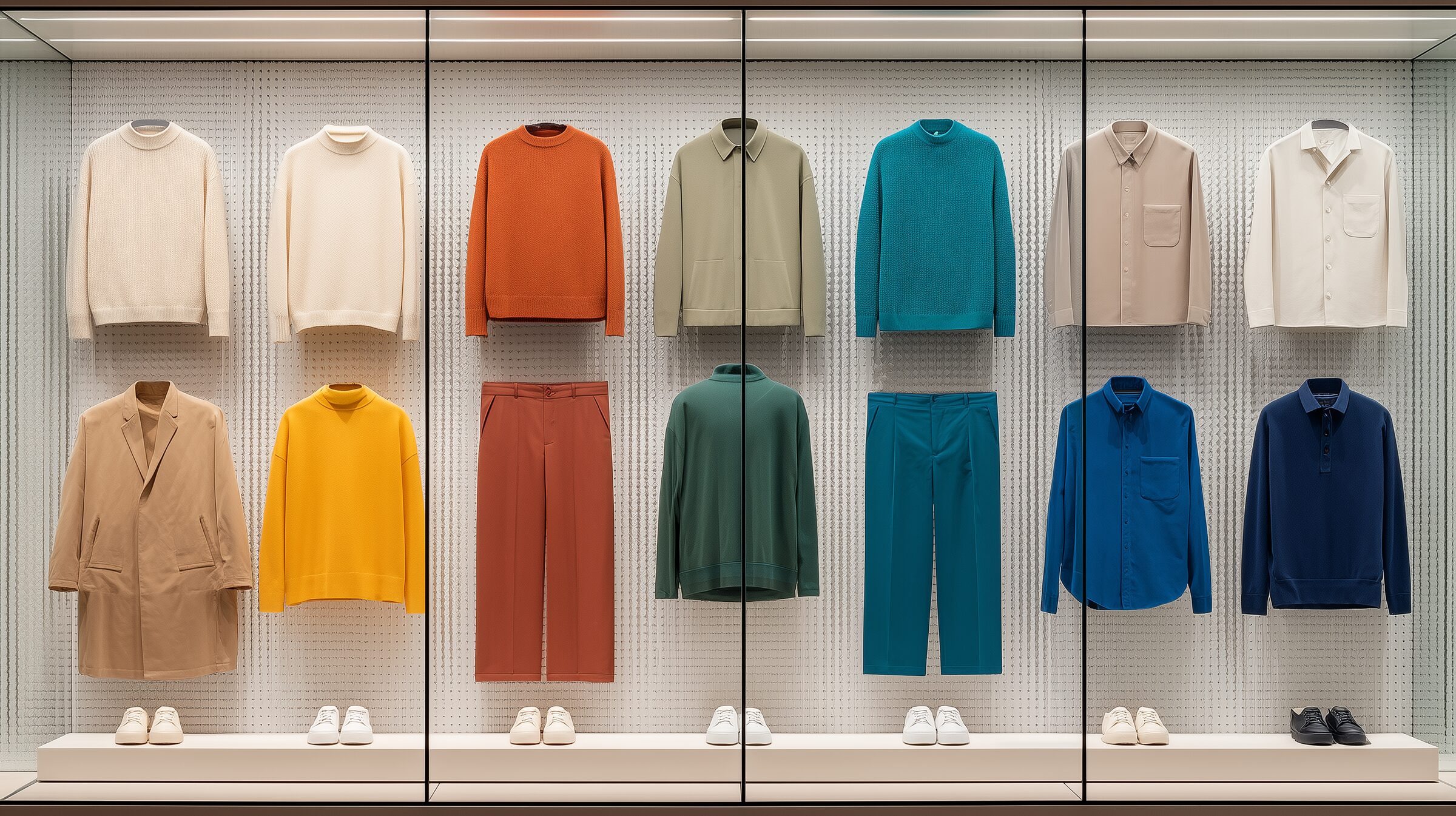
One material scan automatically produces three views in your own visual language. Ready for the online shop, for sales, as an attachment in the customer email, or straight into the customer's PLM. Pick a material and see what comes out.
- Online shop
- Sales
- Customer email
- PLM
50%reduction in lead times at PVH, working with DMIx on color and material approval. Coats is a further public reference.
Modules that typically work together here.
SamplR
Material digitisation in your own building.
Color Managed Library
Your portfolio, searchable, with the data attached.
Company Connect
Secure connections to each of your customers from one account.
Bring one collection. We will digitise it with you and open one brand connection.
A sensible pilot is one collection, one brand connection, one season. That is enough to see whether the material you send digitally gets picked more often than the material you send by courier. It is not enough to justify digitising everything you own, and we would not ask you to.

Three objections we hear first.
Not another brand portal.
Fair. This is the opposite arrangement. You hold one account and open connections to many customers from it, instead of one login per customer. And the entry can be supplier driven, which means you are not waiting for a brand to mandate anything.
We already have devices and software.
Then keep them. DMIx connects to existing systems through standardised REST APIs and the PaX exchange layer rather than replacing your lab or your ERP. The question is whether what those systems produce ever reaches your customer in a form they can use.
Our customers are not asking for this yet.
Some are not. Their 3D teams are, and they are asking whichever supplier can answer. The companies that digitised early are not winning on price. They are winning because their material is the one already sitting in the garment on the screen.
How teams work with DMIx.
A concrete case study from fabric distribution.